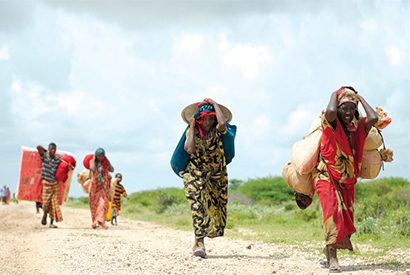
2017 Hunger Report: Fragile Environments, Resilient Communities
Bread for the World Institute’s 2017 Hunger Report, Fragile Environments, Resilient Communities, explains how state fragility stands in the way of ending hunger and extreme poverty. Fragile states are countries where high rates of hunger and poverty are compounded by civil conflict, poor governance, and vulnerability to climate change.
By 2030, two-thirds of the world’s poor will be living in fragile states.
“We will never be able to end hunger or extreme poverty unless the United States and the international community focuses attention and resources on the challenges facing fragile states,” says Rev. David Beckmann, president of Bread for the World Institute. “Hunger and poverty in these countries are only going to get worse due to climate change.”
The report also discusses fragility within the U.S. – communities of concentrated poverty, where 20 percent or more of the population lives in poverty. These communities reflect decades of neglect, and pose a set of challenges that contribute to fragility, including a weak job market, high rates of crime and mass incarceration, lack of services, and limited or no access to nutritious foods.
Ending hunger and extreme poverty is within reach, but only if leaders and policymakers decide to make it a priority. Fragile Environments, Resilient Communities offers recommendations to address the long-term challenges of fragility, including implementation of the Sustainable Development Goals. Addressing fragility now will prevent future conflicts, save lives, build resilience, and put the world on a path toward ending hunger.
The Hunger Report has been published annually since 1975.
Related Resources

SNAP and WIC: Two Vital U.S. Nutrition Programs
The Supplemental Nutrition Assistance Program (SNAP) is the cornerstone of federal food assistance, reaching more than 41 million...

Finding Your Corner in the Sky
“Everything has its season; everything has its time …. Show me a reason, and I’ll soon show you...