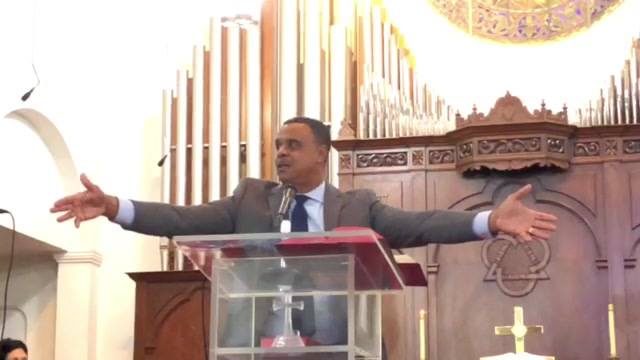
Even with social distancing, churches remain a balm for the faithful during these times, especially churches that are rooted in communities and have served generations of families.
Pastor James McKnight of the 200-member Church of Christian Fellowship in Los Angeles deftly conducts services online. But delivering the Gospel is not all the leader of this historic African American church is worried about.
Giving is down by 80 percent—a situation common everywhere as millions of people have suddenly lost jobs, and millions more recognize any day they could join the ranks of the unemployed.
The Payroll Protection Plan in the CARES Act was designed to provide relief to small businesses so that they did not have to lay-off employees. Churches were eligible, but as Pastor McKnight explained, after consulting with other clergy, “I know of not one church, synagogue, mosque—much less a small business—that has received any money from the program.”
The Church of Christian Fellowship has 10 people on its payroll, all of them part-time except for the pastor. Like any business, it takes more than faith for churches to meet payroll to pay wages and meet other costs.
Pastor McKnight’s frustrations began when he sought a loan from Broadway Federal, the African American-owned bank the church has had an account with for decades. PPP was set up to be administered by banks, but Broadway Federal was not eligible to participate because it did not have a record of processing Small Business Administration loans, one of the rules of the program.
The pastor moved on then to larger institutions, first Bank of America, and then Chase, and then Citizens, and finally Wells Fargo. All were eligible lenders. They told him they had reached their application limits, or they set restrictive conditions on the loan that effectively prevented him from being qualifying on the bank’s terms.
It turns out this was the experience of countless places of worship, and it wasn’t just churches that were not served by PPP. Most small businesses didn’t receive the loans they sought.
The obstacles that churches and small businesses faced was the result of poorly designed policy. Reports showed the banks were mostly interested in “taking care of” their high net worth customers instead of helping smaller applicants with far fewer options and who have proven they are critical for community well-being.
This article was written by Todd Post, senior researcher, writer, and editor at Bread for the World Institute.
Related Resources

Breaking the Cycle: Hunger, Debt, and Climate in the Global South
Every day, millions struggle to put food on the table. In many developing countries, smallholder farmers watch their...
Helping Hungry People and Healing the Land: Regenerative Agriculture in Burundi
By Philippe Lazaro, Plant with Purpose In Burundi, a small landlocked country in East Africa, far too many...