By Stephen H. Padre
In 2015, Bread for the World and Bread for the World Institute began including mass incarceration and the criminal justice system in the issues they work on under the belief that they are both causes and effects of hunger. Momentum around these issues built during that year, which culminated in the founding of a unique organization to continue to build momentum and direct some energy to groups that are particularly affected in these areas.
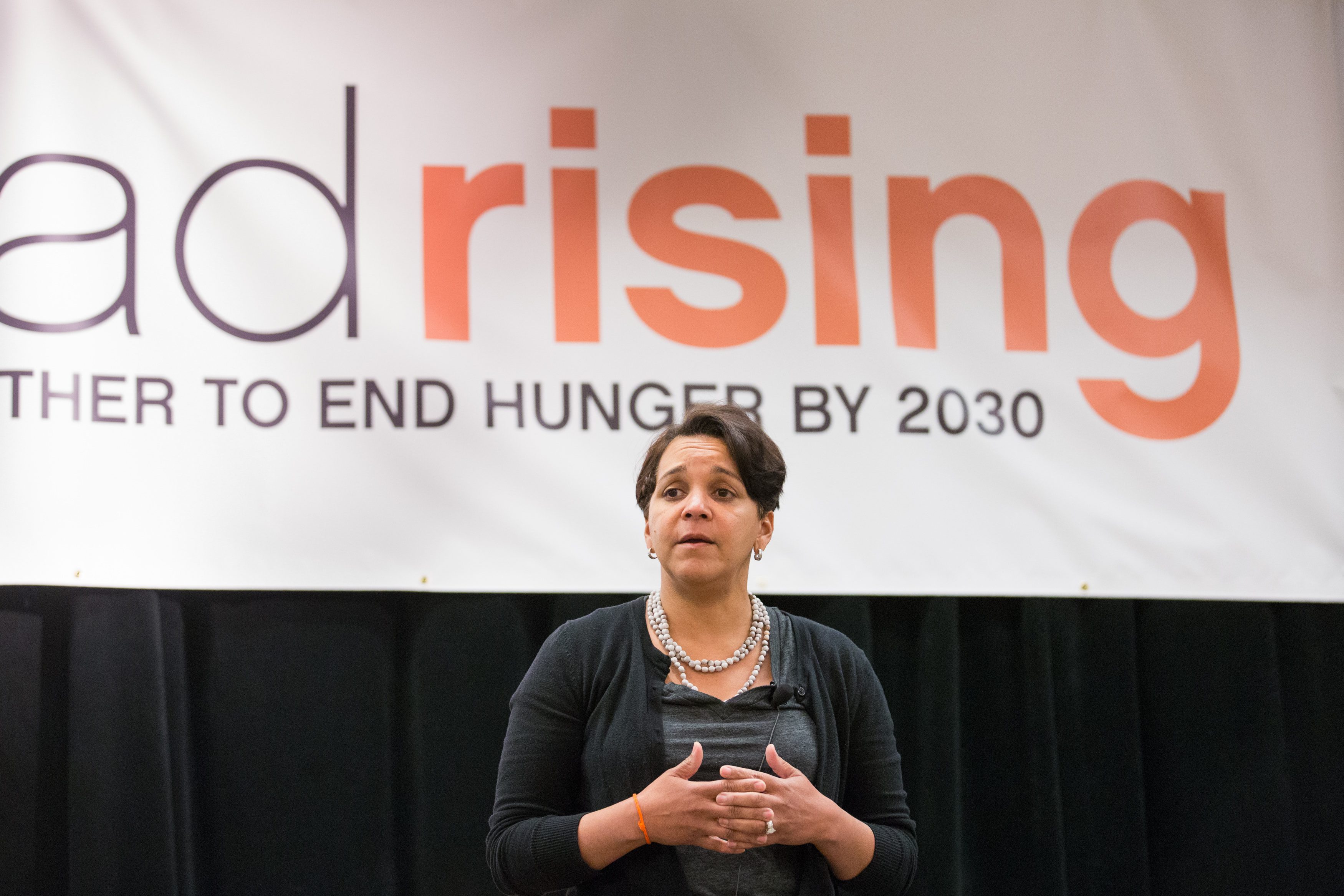
In December 2015, the first-ever national organization created and led by incarcerated and formerly incarcerated women and girls held its first organizing meeting in New York City. The force behind the new National Council for Incarcerated and Formerly Incarcerated Women and Girls is Andrea James.
James’ story was included in the Institute’s 2015 Hunger Report: When Women Flourish…We Can End Hunger. In 2014, James, as founder of Families for Justice as Healing, was one of the speakers at Bread’s National Gathering on the issue of mass incarceration. In these ways, Bread was among the organizations that gave her a national outlet to spread her message of concern for women in prison.
Now her newest organization is in its first stages of growth. Since the council’s first meeting, it has convened other organizing meetings in Atlantic City, Philadelphia, Los Angeles, Washington, D.C., New Orleans, and Nashville. Thousands of formerly incarcerated women and girls have participated in the meetings. The council is also engaging currently incarcerated women and girls in federal and state prisons, county and state jails, and immigrant detention centers.
The council supports incarcerated and formerly incarcerated women and girls who are working to change the criminal justice system individually or within organizations. The council gives its members a place to share knowledge and experiences. Its members know firsthand the impact of the current criminal justice policies as well as the realities of incarceration, the many hurdles women face after returning home, and what changes are necessary to shift the system to one based on human dignity and social justice.
The council aims to bring together policy makers, academics, researchers, and the public in dialogue with its members. Members want to ensure that when policies, laws, practices, organizing, and services about women and girls who are or were incarcerated are decided upon, their voices and ideas are included.
More information on the council can be found here.
Stephen H. Padre is Bread’s managing editor.
Related Resources

In Memory of Pat Pelham: A Life Sown in Justice, Reaped...
At Bread for the World, we often say that ending hunger is not only possible – it’s a...

A Policy Roadmap: Nourish Our Future
In 2025 and 2026, we seek transformative policy change by investing in programs proven to improve child nutrition...